



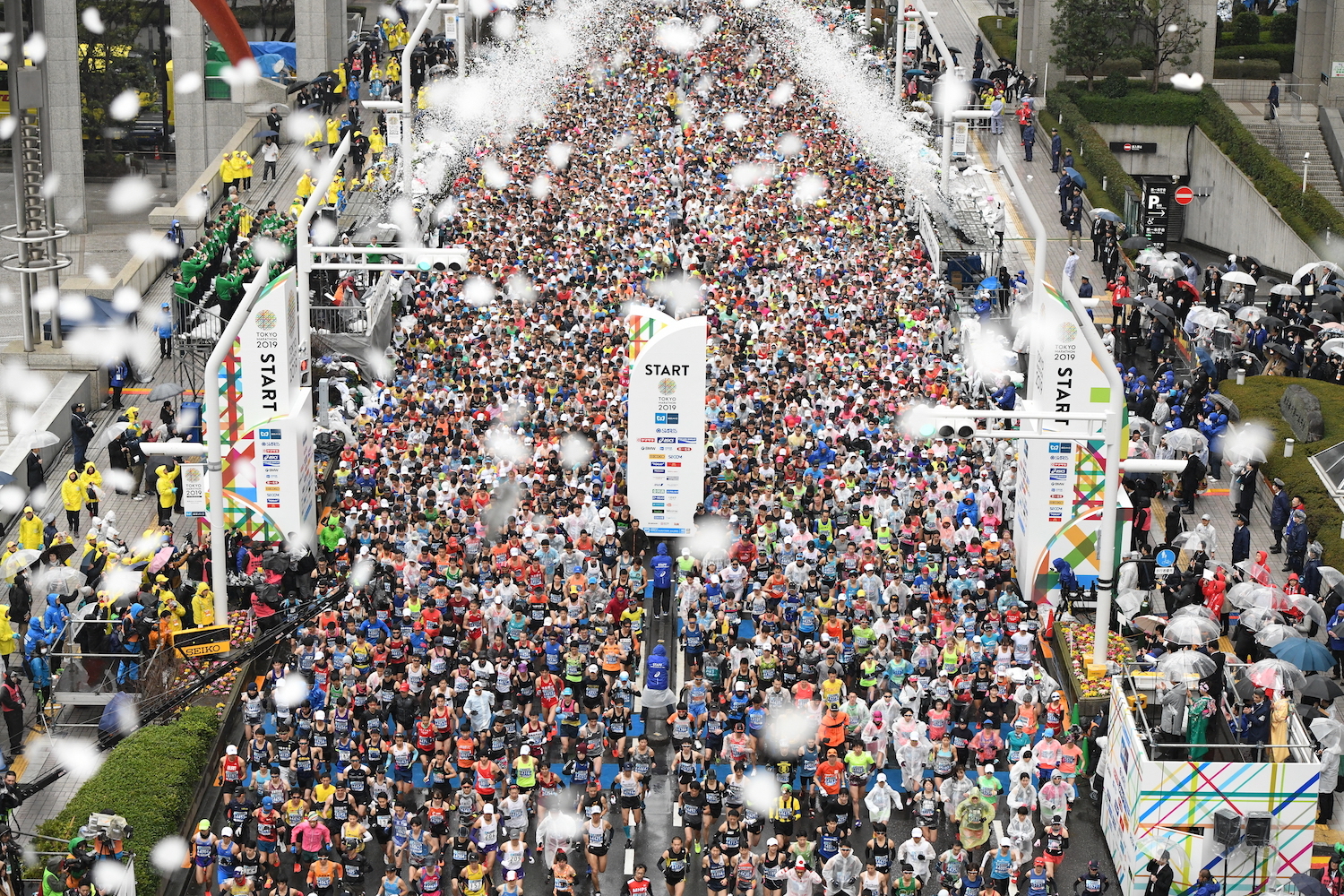
Stand in the start corral of the London Marathon or the New York City Marathon and the event feels like an institution. Road closures, sponsor arches, 45,000 runners, live television. It looks like something a government or a corporation built.
Almost none of them started that way.
The London Marathon began with Chris Brasher, who ran New York in 1979 and came home convinced London deserved the same kind of human celebration. parkrun began when Paul Sinton-Hewitt, sidelined by injury, still wanted a reason to gather with his running friends on a Saturday morning. Thirteen people showed up to the first one. Ironman came out of a bar argument on Hawaii about which athletes were toughest. The New York City Marathon drew 127 starters in 1970.
Look across hundreds of amateur events and one pattern holds: 99% of them are founded by one to five enthusiasts, not by institutions. Usually a runner or cyclist between 35 and 50, often after an injury, a career change, or the buzz of finishing someone else's race. The first edition draws 13 to 700 people on close to zero budget, powered by word of mouth and volunteers. Growth to 300, 1,000, or 2,000 participants happens over roughly two years, and it happens organically. Money and sponsors arrive later.
If you are thinking about starting a race, here is what those first 24 months actually look like.
Phase 1: The spark (months 0 to 3)
One or two people carry a single sentence in their head: "Why doesn't my city have this? I think I could make it happen." The founder writes the idea on one page. A date, a place, a reason it matters, one thing that makes it different. Then come the coffees and the beers with five to ten people from the local club.
The fear at this stage is simple. What if nobody wants it. The first few friends who say "I'm in" are worth more than any spreadsheet, because they turn a private ambition into a shared project.
Phase 2: The idea becomes real (months 2 to 9)
The founder answers three questions in plain language. Who is this for: elite runners, everyday amateurs at 5 to 21 km, or families? What format: a marathon, a city bike ride, a road gran fondo, a free weekly 5K? What makes it different: a route through landmarks, a night start, a charity partner, or the radical openness that made parkrun free forever?
A core team of three to eight people forms around a shared drive and a group chat. They draft a first budget, sketch a route on Komoot or Strava, open a registration page, and send the first careful emails to the parks department and the police. Twenty to fifty registrations and one preliminary permit change the mood from hope to control.
Phase 3: The first event (months 3 to 12)
This is the phase founders remember for the rest of their lives. Course marking, water stations, a medical point, bib pickup. On the day, ten to thirty volunteers run the whole thing on simple timing. The race director spends the morning terrified of chaos and the volunteer coordinator worries about last-minute cancellations.
Then the last participant crosses the line, the finish photos go up, and the first thank-you emails go out. "We actually did it."
Phase 4: The first year after (months 6 to 18)
Now the real test arrives, and it is retention. Will participants come back? Will the volunteer team stay, or burn out? The founders run a second edition, fix what broke, add a post-race survey and a referral push, and land their first small sponsors. A retention rate of 40 to 60% and a proper thank-you dinner tend to keep the team together.
Phase 5: Year two (months 18 to 24)
The event turns into a brand. The founders register a legal entity, hire their first paid help, sign longer sponsor deals, and often add a second distance or a second event. Sponsors now ask for proof of reach and return, so measurement stops being optional.
The moment the whole journey points to
Every phase above builds toward a few seconds at the finish line. A participant crosses, and someone places a medal around their neck. For a first-timer at 5K or a runner finishing their first marathon, that object becomes the physical proof of months of training and, invisible to them, two years of an organizer's work.
First-time organizers tend to treat the medal, the participant shirt, the on-site engraving, and the finish photos as line items to sort out in the final weeks. Experienced directors treat them as the experience itself, and they decide on them early. A finisher medal that feels cheap undercuts a course you spent a year perfecting. A well-made one gets photographed, posted, and shown to friends, which is how next year's registrations start filling up.
This is the part of the journey where WITISI works with organizers. We are a European manufacturer and full-service event partner, and we help with the finish-line experience end to end: custom medals and awards, including eco-material lines; participant apparel and merchandise; professional sports event photography; on-site laser engraving so runners leave with their name and time already on the medal; and Digital Awards that extend the physical medal into a shareable digital keepsake. As an EU company, we invoice with VAT and commit to reliable delivery dates, which matters when your event has one fixed day and no second chance.
What to do if you are at Phase 1 right now
Write your idea on a single page. Gather two or three friends over coffee this week. Open a proven race-director checklist and tick off the first items. And when you start planning the finish line, talk to a partner who has equipped hundreds of events across Europe, so the last few seconds of your race match the two years you put into it.