



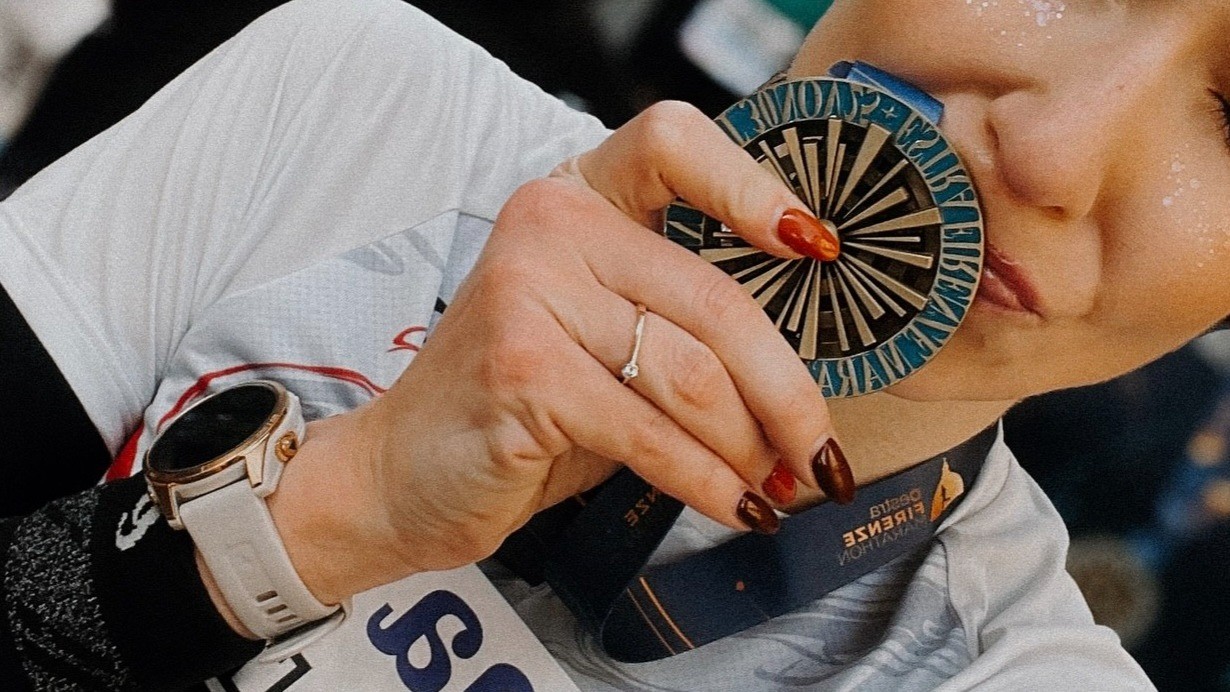
For a mass-participation race, triathlon, or cycling event, the finisher medal is the primary tangible result of months of hard work. It is the exact object participants will examine at the finish line, share on social media, and cherish for years to come.
However, for race directors and merchandise managers who are just starting out in the industry, ordering awards often turns into a complex logistical and financial puzzle filled with hidden production nuances. A mistake in choosing materials or technology can result in medals that are too light, deform during transit, or distort the corporate Pantone colors of a title sponsor.
This guide is designed to break down the technical aspects of the medal industry in a detailed yet straightforward way, helping you speak the same language as manufacturers.
Three Technologies Compared
The key differences from the sections below at a glance.
| Criterion | Die-casting | Stamping | Cutting |
|---|---|---|---|
| Relief | True 3D volume, multiple relief heights | Flat, two-level 2D relief | Flat planes only, no 3D volume |
| Shape and windows | Any custom shape, internal cutouts and windows | No internal open windows | Complex external contour, ribbon slot |
| Interactive elements | Spinners, opening parts, bottle openers | Not possible | No internal moving mechanisms |
| Thickness | 3.5 to 5 mm, smooth, safe edges | Thin profile | Sheet material |
| Large runs | Stable quality from the first piece to the thousandth | Stamp wear, last pieces may show blurred relief | Quick unique batches |
| Tooling | High-precision steel mold, takes time upfront | Matrix and stamp | No costly molds |
Green: a strength of the technology. Yellow: something to plan for. Red: technically not possible.
1. Die-Casting: The Technological Leader in Mass Sports
In the modern industry of recurring mass-participation events, the vast majority of medals are produced with high-precision die-casting.
- Zinc alloyThe base material is zinc alloy, commercially known as ZAMAK: zinc-aluminum-copper.
- Casting under pressureThe alloy is heated to a liquid state and injected under high pressure into a specialized steel mold (die).
- Precise reliefThe metal instantly fills all micro-cavities and solidifies, replicating the artist's most complex concepts with sub-millimeter precision.
Today, this is the most progressive and versatile technology for sports events due to several key factors:
Limitation
- The only drawback of zinc alloy die-casting is the initial time required to design and manufacture the high-precision steel mold. However, within a standard production and planning cycle of a sporting event, this factor is completely mitigated.
2. Precision Stamping: The Classic Method and Its Limitations
Stamping is a traditional mechanical method where a heavy press strikes cold sheet metal (such as brass or steel), literally forcing the design from a matrix onto the blank. This method can be used to create high-quality medals with highly detailed heraldry (such as state awards), as well as the most basic, flat souvenir items.
However, for organizers of large-scale endurance events, stamping presents two major technical drawbacks:
Two drawbacks
- Strict Design Restrictions: The physical properties of sheet metal do not allow it to be pressed too deeply. A stamped medal always remains flat (a two-level 2D relief), features a thin profile, and completely eliminates the possibility of creating internal open windows, filigree elements, or interactive spinning parts.
- Inconsistent Quality in Large Runs: When manufacturing batches of several thousand pieces, the stamping tooling undergoes immense mechanical wear from continuous, forceful impacts. As a result, while the first medal in a batch will be perfect and crisp, the last pieces in the run may feature blurred, lower-quality relief due to stamp degradation.
In contrast, die-casting introduces liquid metal that gently fills the mold without mechanical impacts, ensuring that the quality of the entire batch remains absolutely stable from the first piece to the thousandth.
3. Contour and Cutout Cutting: A Tool for Customization
Cutting (laser or high-precision CNC milling) is applied either as a standalone method for sheet materials or as a final processing stage for blanks.
Advantages
- Internal Ribbon Slots: One of the main technological advantages of cutout cutting is the ability to create an elegant slot directly inside the body of the medal (a horizontal cutout in the upper section). This allows the finisher ribbon to be threaded directly through the medal, completely eliminating welded external loops and rings that often cheapen the look of the award.
- Custom Contours: Cutting allows for a perfectly executed, complex external contour of the medal.
- Wood and Plastic Without Molds: High-precision laser cutting serves as the foundational technology for creating wooden and plastic medals, where a unique batch of awards needs to be cut quickly without the expense of costly molds.
Limitation
- Unlike die-casting, cutting only works within flat planes (two-dimensional space). It cannot create a fully realized 3D volume or integrate complex internal moving mechanisms.
4. The Chemistry of Color: How Enamels Protect Sponsor Brand Guidelines
For a commercial sporting event, color distortion at the finish line represents a serious reputational risk with partners. Special polymer enamels are used to color the medals.
Soft (Cold) Enamel
Liquid colored paint is poured into the medal's recessed cells using a dispenser. As it dries, it naturally shrinks, leaving the metal borders slightly raised and creating a pleasant tactile relief. To protect against scratches, these medals are frequently coated with a clear epoxy dome.
Hard Enamel (Epola)
This is a premium solution. The cells are filled with a thick paste, baked at a high temperature, and then mechanically polished on a machine to be perfectly level with the metal borders. The result is a solid, completely smooth surface. Epola guarantees an exact match with the Pantone palette of your title sponsor.
5. Industry Insights: Why Cast Zinc Became the Global Choice
The reason why the vast majority of medals worldwide are produced via zinc alloy die-casting lies in its unique balance of cost efficiency, durability, and limitless opportunities for custom design. Heavy, volumetric 3D medals of virtually any diameter and thickness with an "antique metal" finish have become the mandatory standard for most races of any size and tier.
Nevertheless, there are historic, protocol-driven, or conceptual exceptions in the market that showcase the diversity of the awards industry:
The Olympic Games
The composition is strictly regulated by the IOC to ensure absolute museum-grade longevity. Bronze Olympic medals are made from an alloy of copper, zinc, and tin. Silver and gold medals are crafted from 925 sterling silver, with gold medals additionally covered in a layer of pure gold weighing at least 6 grams.
The Boston Marathon
As the world's oldest marathon, the Boston Marathon manufactures finisher medals from Recycled Steel using Dimensional Steel technology, pairing a heavy weight with recycled material.
The Nobel Prize Medal
The world's highest honor in science and culture is traditionally produced using the classic stamping method out of solid 18-karat green gold plated with 24-karat gold, a choice dictated by its strict heraldic, historical, and entirely flat design.
6. Recycled Zinc, Wood and Plastic: The New B2B Trend for Mass Events
The global shift toward ESG criteria is rapidly transforming the mass sports industry. Modern athletes and major brands increasingly evaluate events not only by the quality of the race village but also by their environmental footprint.
For a race director, introducing awards made of recycled metal, certified wood or recycled plastic is a powerful marketing and commercial tool. Offering such a material line helps secure and significantly expand the sponsor sales funnel, attracting partnerships from large tech, retail, and financial corporations that strictly adhere to ESG KPIs and seek projects to integrate their environmental initiatives.
Depending on the event concept, organizers can utilize three key directions:
Recycled Zinc
This is an ideal compromise for a B2B solution, allowing you to fully retain all the benefits of die-casting: any 3D geometry, cutouts, interactive elements, and the substantial weight familiar to finishers.
These medals are cast from an alloy obtained through metal recycling.
Natural Certified Wood
The awards are produced from wood sourced from responsibly managed forests holding FSC or PEFC certifications.
Wooden medals possess a unique natural texture, warm tactile properties, and a sophisticated craft aesthetic. Producing these medals using laser cutting and engraving bypasses energy-intensive plating and melting processes.
Significantly lighter: substantially lowers logistics and shipping costs for the entire run.
Recycled Plastic
A vibrant, modern solution that visually demonstrates recycling principles to participants. The medals can be manufactured from recycled plastic caps collected during collection campaigns, or from rPET polymers.
They open up vast creative potential for bright, neon, or mosaic designs that look exceptionally stylish in social media photos.
Ribbons Made of rPET or Organic Cotton
A medal made of recycled or certified material calls for a matching ribbon. A common choice is ribbons made of rPET (recycled polyester derived from repurposed plastic bottles) or organic cotton. At the same time, they provide excellent full-color sublimation printing quality for sponsor logos.
less energy is required to produce rPET ribbons compared to virgin polyester.
Which materials are available for eco medals and what to check for each one: read our guide Eco Medals Compared.
Conclusion
Understanding the basic principles of manufacturing can safeguard an event budget against hidden costs and defects. By choosing high-precision die-casting from classic or recycled zinc alloys as a foundational technology, an organizer fulfills all technical and partnership goals: receiving a durable, weighty product with unique 3D geometry, interactive options, and sharp relief capable of meeting the strictest brand guidelines. When designing an event for 500 or 20,000+ participants, the requirements for a supplier's stability and capabilities scale up significantly.
The WITISI team is dedicated to fully covering the operational challenges of organizers through a One-Stop-Shop format. Whether handling complex technical orders with interactive, rotating elements and deep relief or managing massive production runs, strict quality control at every stage guarantees flawless execution exactly on deadline.
- Concept and Material AnalysisWe will help select the best solution for your budget, from substantial zinc medals to medals made of natural wood with rPET ribbons.
- Free 3D DesignWe will develop the layout of your future award based on your request, brand book, and sponsor logos within 48 hours.
- Production and End-to-End LogisticsWe will manufacture a batch of any size and deliver the shipment directly to the finish village.
A medal is the primary tangible result of the months of hard work put in by your team and the athletes. At home, a participant hangs it on the wall, and it ceases to be just a souvenir. For that individual, it represents a memory of months of training, early mornings, overcoming fatigue, and the moment they finally crossed the line.
We will discuss exactly how the physical parameters of an award subconsciously shape the perception of your race and drive repeat slot sales for the next season in one of our upcoming articles.