



The finish line is the defining moment of any mass sports event. For decades, this moment has been tied to traditional rewards: a heavy metal medal around the neck and a vibrant synthetic finisher T-shirt.
These items serve a crucial psychological and social purpose. They provide tangible proof of completing the distance, preserve the memory of the achievement, and motivate participants to return to the starting line in future seasons. Traditional zinc alloy die-casting with multicolored enamels and high-quality apparel remain the industry's gold standard due to their durability, premium look, and high perceived value among runners and triathletes.
However, the endurance sports industry is actively evolving, adapting to modern management and environmental standards. International federations, including World Athletics and World Triathlon, along with major sports brands and World Marathon Majors organizers, are gradually adding recycled materials, less single-use plastic and digital services to their frameworks. This shift is not about replacing time-tested classics; rather, it aims to expand the product lineup, optimize event budgets, and deliver innovative B2B tools for sponsors.
- Boston, Los Angeles, Tokyo: medals made from recycled steel, recycled zinc alloy and metals from old electronics.
- Wood, pressed glass and composites add to the classic die-cast zinc medal, they do not replace it.
- On the course: edible water pods, personal flasks instead of cups, collection boxes for old running shoes.
- Digital medals show time, pace and the finish-line video, with room for sponsors.
- Let runners choose at registration: classic, recycled materials or digital.
1. International Insights: Integrating New Materials into Award Production
Modern technologies enable sports award manufacturers to offer alternative solutions that match the premium aesthetics of traditional alloys while utilizing recycled or renewable raw materials.
The Boston Marathonmedal and ribbon
The organizing committee introduced finisher medals made from 100% recycled steel using Dimensional Steel technology. The ribbons were completely woven from threads derived from recycled plastic bottles (rPET). This case demonstrated that a historic major event can adopt recycled metals while fully maintaining the premium status of the award.
The Los Angeles Marathonapparel and souvenirs
Organizers introduced the practice of using certified ocean-bound plastic for apparel elements and souvenir products. Additionally, the metal base of their medals is sourced from suppliers utilizing recycled zinc alloys.
Medals from old electronicsthe Tokyo example
A trend set by the Tokyo Olympic Games, where all medals were cast from recycled smartphones and gadgets, has now been embraced by commercial races. Extracting precious and non-ferrous metals from old electronics is becoming a popular theme for conceptual runs.
Alternative Materials in Action: Real-World Experience
Alongside standard die-casting, organizers are increasingly choosing craft medals made from FSC-certified wood, pressed glass, or composites.
- Recycled steel
- Recycled zinc alloy
- FSC-certified wood
- Pressed glass
- Composites
- rPET ribbons
Our case study: Fjällmaraton Sälen by EQPE
We saw this approach in action while working with the organizers of the Swedish mountain marathon Fjällmaraton Sälen by EQPE. For their 2025 event, our team manufactured a specialized wooden medal. In a race where water is delivered to aid stations by bicycle and printing is sourced exclusively from local partners, this award was a natural extension of the event's core philosophy.
For a material-by-material comparison of recycled zinc, wood, acrylic, cork, paper and bioplastic, see our guide Eco Medals Compared.
Trends in Sports Apparel: From Render to Runner
In official T-shirt production, virgin polyester is gradually yielding to recycled polyester (rPET) and organic cotton. Crucially, modern recycled microfiber fabrics fully retain essential athletic properties: exceptional moisture-wicking and high wear resistance.
Organizing a large-scale marathon demands engineering precision, particularly when rolling out new materials.
Our case study: RunCzech apparel
For RunCzech, the organizers selected 100% recycled plastic as the material for their official shirts. We brought this fabric concept to life while preserving a complex design and reduced individual plastic packaging virtually to zero.
received comfortable T-shirts made from recycled material.
2. On-Course Innovation: Infrastructure and Hydration
The changes extend far beyond the finish village. Organizers of major races are adopting new solutions right out on the course.
- Edible Water Pods (Ooho by Notpla)
The pod coating is made from brown seaweed and is tasteless. Runners can swallow the sphere whole or bite into it on the move. According to the manufacturer, a pod dropped on the pavement decomposes within 4-6 weeks without leaving behind microplastics. This technology replaced tens of thousands of plastic cups at the London Marathon.
- Cup-Free and Bottle-Free Concepts
At the Paris Marathon, runners are required to start with their own soft flasks. To help participants maintain their pace, aid stations are equipped with high-flow water fountains: specialized taps that can fill a 400 ml flask in under two seconds.
- A Second Life for Running Shoes
Major races partner with athletic brands on recycling initiatives (such as Nike Grind), setting up collection boxes at race EXPOs for old running shoes. The shredded rubber is repurposed into surfaces for playgrounds, running tracks, or even stands for future medals.
is what the high-flow taps at the Paris Marathon pour into a runner's own flask.
3. Sociology and Psychology: Linking Sport with Environmental Awareness
Data shows that endurance sports participants demonstrate high receptivity to environmental issues.
“Green Exercise” and the Nature Connection
Runners and triathletes who train this much in parks and forests are directly exposed to weather patterns and air quality.
The practice of mindful running fosters a protective attitude toward these spaces. Athletes begin to view the environment as “their playground”, one that requires proactive defense.
The Huang & Chiu Study (2024)
This academic study showed that a participant's level of environmental responsibility directly shapes their perception of overall race quality.
- Environmental responsibilityof the participant
- Perceived race qualityenvironmental initiatives read as a hallmark of a premium event
- Loyalty to the eventgrows when runners can choose between classic and alternative attributes
Source: Huang & Chiu (2024)
Plogging, Upcycling, and Corporate Wellness
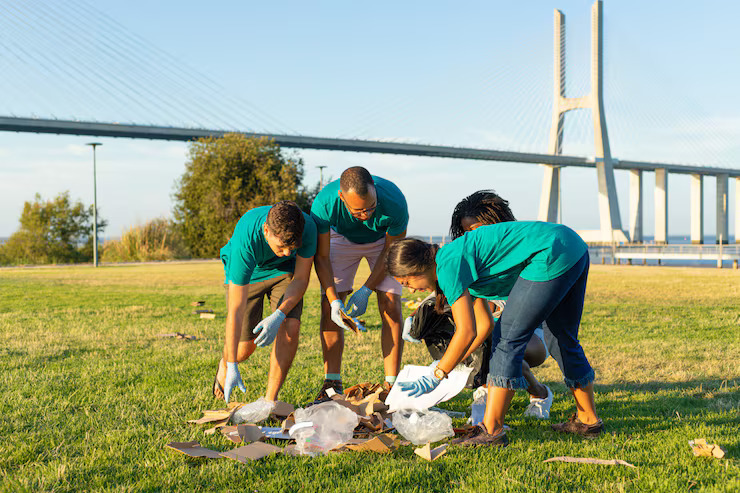
The sports community itself is setting new benchmarks, driven by the Swedish practice of plogging: running while gathering litter. Some organizers collect plastic on the course or host pre-race plogging sessions, then turn that plastic into finisher ribbons or tote bags for the following season. This allows participants to literally wear the results of their efforts around their necks.
This format is also expanding within the Corporate Wellness segment. For instance, social entrepreneurs like Vanessa Dziatzko (founder of dreamactive) are successfully scaling the concept of Cleanup Runs.
Her running project with WeWork showed that a light group run through Hamburg's Planten un Blomen park and along the Elbe shore can collect an impressive amount of washed-up debris in just 30 minutes.
4. The Rise of Digital Medals
Alongside physical innovations, the industry has made a major leap forward into digitalization. Digital medal services emerged as a direct response to the rise of virtual races, and they now serve as an excellent add-on to traditional live events.
A digital medal is an interactive 3D or AR object that integrates into a runner's digital Hall of Fame, offering instant social media sharing and compatibility with popular running apps.
Core Business Advantages
Unlike a physical medal, a digital award is dynamic. For organizers, it functions as a high-powered B2B marketing tool.
Learn more: What Is a Digital Finisher Medal?
5. Economics and a Flexible Approach for Race Directors
Shifting to new materials does come with certain boundaries. Classic medals made from virgin alloys remain essential for complex, multi-level designs, spinners, or integrating NFC chips. Completely abandoning them is impractical, as the majority of participants still look forward to receiving a heavy, physical metal award at the finish line.
To balance budgets while satisfying a diverse audience, pioneering organizers are experimenting with the “Flexible Start Entry” (Opt-out) concept. During registration, participants are given a choice:
Classic
What: The classic die-cast medal and traditional merchandise bundle.
Strength: Complex, multi-level designs, spinners, NFC chips. The heavy metal award most participants look forward to.
Recycled materials
What: For example recycled steel or zinc, rPET ribbons, FSC-certified wood.
Keep in mind: Premium materials such as rPET or certified wood require rigorous international auditing, which can increase manufacturing costs.
Digital
What: Declining physical souvenirs in favor of a 3D digital reward.
Strength: Time, pace, finish-line video and room for sponsors.
The production savings achieved from opt-outs can then be redirected by the organizing committee to environmental conservation funds. This approach tackles the issue of overproduction while granting athletes the freedom of choice they increasingly desire.
Conclusion
The rise of medals from recycled and renewable materials, apparel made from recycled fibres, and digital reward ecosystems represents a natural milestone in the evolution of sports management. These innovations do not stand in opposition to classic traditions; instead, they enrich them.
The classic zinc alloy die-cast medal firmly maintains its position as the trusted, definitive symbol of an athlete's triumph. At the same time, expanding your lineup with modern alternatives allows organizers to capture new sponsors and lift runner loyalty.
As a dedicated manufacturing and technology partner, WITISI is already integrating these solutions into European races. Our work spans from crafting bespoke wooden medals and event merchandise made from recycled materials to deploying interactive Digital Medals.
Our experience shows that a well-executed mix of new materials and digital services doesn't replace the classics. It elevates the finish line into a modern, high-tech, and commercially successful asset.
- Where does your design need classic die-casting: multi-level layers, spinners, an NFC chip?
- Which items can be made from recycled materials: medal, ribbon, shirt, packaging?
- If you choose certified materials, plan time and budget for the audits.
- Offer a choice at registration: classic, recycled or digital.
- Use the digital medal for sponsors: logos and links to partner promotions.
Read next
Refresh your awards and merchandise for the next event
If you are looking to refresh your awards and merchandise strategy for an upcoming event, we are ready to share our case studies and tailor the ideal solution for your race.